A leather bag can last 20 years when three conditions line up: durable leather, controlled moisture and heat, and early repairs. In 2026, long-term bag care matters for cost, style, and waste.
The U.S. EPA estimated 17 million tons of textiles in municipal solid waste generation in 2018, with 11.3 million tons landfilled, according to EPA textile data.
A 20-year-old leather bag does not need luxury rituals. It needs a weekly wipe, careful storage, modest conditioning, dry interiors, repaired stitching, and sensible habits during rain, commuting, travel, and summer heat.
Start With Repairable Leather
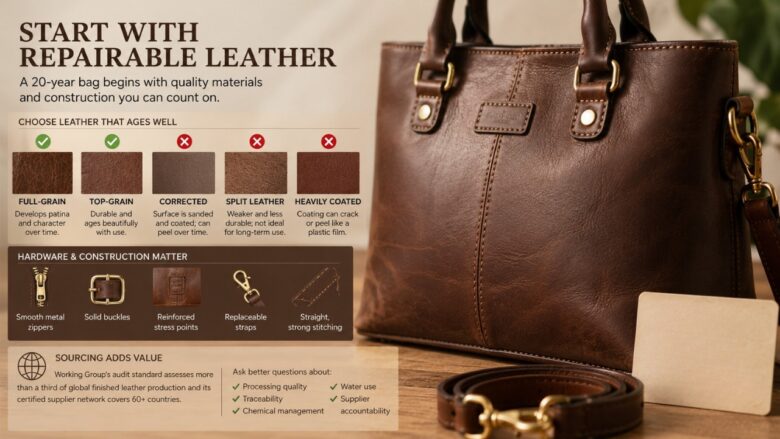
A 20-year care plan begins before the first polish cloth. Full-grain and good top-grain leather usually age better than thin corrected leather, split leather, or heavily coated fashion leather, because the surface can develop patina rather than peel like a plastic film.
Hardware matters as much as the hide. Look for metal zippers that run smoothly, solid buckles, reinforced stress points, replaceable straps, and stitching that sits straight under tension. Sourcing has also become part of the value in 2026.
Leather Working Group says its audit standard assesses more than a third of global finished leather production, and its certified supplier network covers 60-plus countries, according to the Leather Working Group.
That does not guarantee a single bag will last 20 years, but it gives buyers a way to ask sharper questions about processing quality, traceability, chemical management, water use, and supplier accountability.
View this post on Instagram
For readers comparing long-term options, Grainmark Leather is a useful reference point because its range centers on full-grain leather bags and everyday leather goods built around durability, function, and character.
The 20-Year Leather Bag Care Calendar
A long-lived leather bag comes from small routines, not emergency rescue work. For a bag used three to five days per week, the schedule below is realistic.
| Care Task | Frequency | Why It Matters |
| Empty receipts, pens, crumbs, and makeup | Daily or weekly | Prevents stains, odors, lining damage, and warped pockets |
| Wipe dust with a soft cloth | Weekly | Limits abrasive grit on handles, corners, and seams |
| Check handles, zippers, strap holes, and corners | Monthly | Early wear is cheaper to repair than torn leather |
| Clean with a leather-safe product | Every 2 to 3 months | Removes grime before it bonds with oils and sweat |
| Condition lightly | Every 3 to 6 months, or when dry | Keeps leather flexible without greasy buildup |
Museum conservation guidance from the National Park Service treats dusting as a common leather-care method but warns that dust can abrade surfaces when material is brushed, as noted in its leather care guidance.
For personal bags, use a clean microfiber cloth or very soft brush, not rough cloth, paper towels, or old T-shirts.
How Should You Clean A Leather Bag?

Clean a leather bag by removing dust first, then using a barely damp cloth or a leather cleaner matched to the finish.
Never soak leather, scrub with force, or experiment with vinegar, bleach, alcohol, baby wipes, laundry detergent, or kitchen degreaser.
Start with a dry wipe. Open pockets, remove debris, and work around seams, gussets, zipper tape, and handle bases. If grime remains, test the cleaner on a hidden area, wait until dry, then check whether color, shine, or texture changed.
For finished smooth leather, a small amount of leather cleaner on a cloth is enough. For suede or nubuck, use a suede brush and proper eraser, because water can leave marks and flatten nap.
Aspinal of London recommends weekly removal of dust and spots with a soft cloth or brush, and warns against overfilling handbags because leather can stretch, in its leather care guide.
How Often Should You Condition A Leather Bag?

Condition a leather bag only when it feels dry, stiff, or tired, often every 3 to 6 months for a daily bag and less often for one kept in rotation.
Over-conditioning can darken leather, attract dust, soften structure, and encourage mildew in humid storage.
The Western Australian Museum cautions that leather dressings should not be routine for collection objects, partly because excess oils can increase acidity, discolor surfaces, attract dust and insects, and encourage mould, according to its conservation manual.
A handbag is not a museum artifact, but the lesson carries over: leather needs balance, not saturation.
Use a neutral leather conditioner made for bags, not cooking oil, hair conditioner, saddle soap for every finish, or heavy boot grease. Apply a pea-sized amount to a cloth, spread thinly, wait, then buff. The surface should feel supple, not wet or tacky.
How Do Rain, Sweat, Sun, And Heat Damage Leather?
Rain, sweat, direct sun, and heat damage leather by moving moisture and oils through the surface, then leaving stains, stiffness, fading, salt marks, or cracks. A soaked bag should be emptied, blotted with a clean towel, shaped gently, and left to air-dry at room temperature.
Do not place a wet leather bag near a radiator, hair dryer, car heater, fireplace, or direct summer sun. Artificial heat can dry leather and encourage cracking, while strong sunlight can fade the surface over time.
Handle areas absorb skin oils, sunscreen, hand cream, and salt. During summer commuting, wipe handles more often and avoid grabbing pale leather immediately after applying lotion. For light-colored bags, denim transfer from jeans and jackets is another 20-year enemy.
How Should A Leather Bag Be Stored?
Store a leather bag empty, clean, shaped, and ventilated. Use acid-free tissue, a white cotton pillowcase, or the original dust bag. Keep it away from plastic bags, damp closets, radiators, windows, and high-pressure areas.
The National Park Service advises that leather objects should not be piled, folded, squashed, or leaned, and recommends supports plus dust covers for storage.
Aspinal gives similar handbag advice: empty the bag, shape it with plain acid-free tissue, protect hardware from imprinting, and avoid plastic bags because ventilation matters.
For humid closets, airflow is critical. Western Australian Museum guidance says mould prevention depends on effective air circulation, relative humidity below 70 percent, and avoiding over-lubrication. A sealed plastic bin may look tidy, but it can trap humidity and odor around leather.
Repairs That Keep A Bag Alive
Repair leather bags early. Loose stitches, separating handle tabs, worn edge paint, bent zipper pulls, torn lining, and cracked strap holes often start small, then spread under weight.
A cobbler or leather repair shop can usually restitch seams, reinforce handles, replace zippers, repair edge paint, add a new strap hole, patch lining, re-dye faded corners, or replace hardware. Deep cuts and peeling bonded surfaces are harder.
Surface-level scuffs on full-grain leather may become patina, while a cracked coating on cheap leather often signals limited repair value.
Mistakes That Shorten A Leather Bag’s Life
| Mistake | Better Habit |
| Hanging a heavy bag by one strap for months | Store supported on a shelf |
| Carrying a laptop in a non-laptop handbag | Use a structured bag with reinforced handles |
| Cleaning stains with alcohol wipes | Blot and use finish-appropriate leather cleaner |
| Storing in a plastic bag | Use breathable cotton or a dust bag |
| Applying thick oil “for shine” | Condition lightly only when dry |
Can Every Leather Bag Last 20 Years?

No. A leather bag can last 20 years only when the material, construction, use pattern, and care routine are strong enough.
A full-grain briefcase used carefully in an office may age beautifully for decades. A thin fashion tote overloaded daily with a laptop, water bottle, keys, and cosmetics may fail much sooner.
Price is not a perfect predictor. Some expensive bags use delicate finishes, pale colors, or soft structures that need gentle use. Some mid-priced bags last years because the leather is thick, the stitching is solid, and the owner fixes damage quickly.
Summary
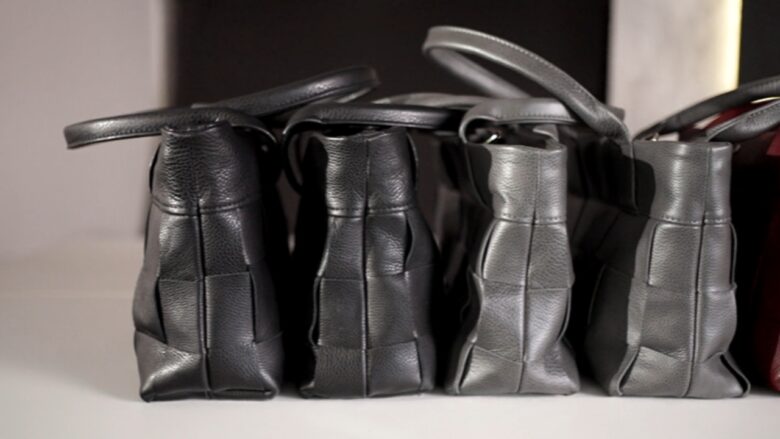
A 20-year leather bag is built through restraint. Clean before grime settles, condition before cracking starts, store with shape and airflow, keep heat and moisture away, and repair small failures before structural damage begins.
That approach is practical rather than sentimental. It saves money, lowers replacement waste, and lets leather age with character instead of neglect.
 Rhydian Choi
  Nina Smith