

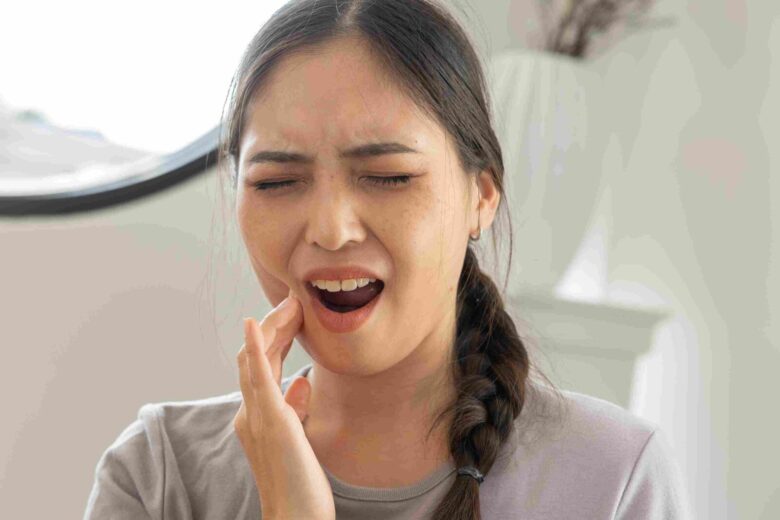
Tooth sensitivity often feels like a sharp zing. Cold water, hot coffee, sweet foods, acidic snacks, cold air, or brushing can trigger it.
At least 45 million Americans deal with sensitive teeth.
- Hot foods or drinks
- Cold foods or drinks
- Cold air
- Brushing
Sensitivity is common, but it is usually a symptom, not a condition on its own.
Pain can signal enamel wear, gum recession, tooth damage, decay, grinding stress, or dental work that no longer seals the tooth well.
Sensitive teeth should not be treated as a minor annoyance when the pain keeps coming back.
A quick zing may be an early warning that the tooth’s protective barrier has weakened.
What Causes Tooth Sensitivity?

Sensitivity usually begins when dentin becomes exposed. Dentin sits beneath enamel and contains tiny tubules that lead toward the tooth’s nerve.
Once enamel wears down or gums pull back, heat, cold, sweetness, acid, or pressure can pass through those tiny channels and irritate the nerve.
Several common problems can expose dentin or make teeth more reactive:
| Cause | Trigger or issue | Why it causes sensitivity |
| Enamel erosion | Acidic foods and drinks | Enamel thins. |
| Gum recession | Exposed roots | Roots lack enamel protection. |
| Hard brushing | Hard bristles or abrasive products | Enamel and gums wear down. |
| Cavities | Sweets, cold, pressure | Decay reaches sensitive layers. |
| Cracked or chipped teeth | Temperature or biting pressure | Inner tooth areas are exposed. |
| Grinding or clenching | Repeated tooth pressure | Enamel wears down. |
| Whitening or recent dental work | Bleaching or dental procedures | Teeth become temporarily reactive. |
| Worn dental work | Loose or aging fillings and crowns | Seals weaken. |
Acidic foods and drinks matter most when exposure happens often.
Repeated acid contact can soften enamel again and again, making teeth more vulnerable to temperature changes and brushing.
Brushing habits can also make sensitivity worse.
Scrubbing hard does not clean better. It can wear enamel near the gumline, irritate gum tissue, and expose areas that react quickly to cold air or drinks.
Cavities, cracks, and loose dental work need extra attention because they usually do not improve with toothpaste alone.
Pain in those cases often means the tooth needs direct treatment, not only symptom control.
Grinding can be harder to notice because it may happen during sleep.
Worn biting edges, morning jaw tightness, headaches, or sore teeth can all suggest that pressure is affecting enamel and tooth structure.
What Your Sensitivity Might Be Telling You
Cold sensitivity often points to enamel wear, exposed dentin, or gum recession.
A brief sting after cold water or cold air can mean the outer layer is no longer blocking triggers well.
Sweet sensitivity may point to enamel breakdown or a developing cavity. Sugar can irritate weakened areas, especially when decay has started or enamel has thinned.

Pain patterns can give helpful clues before a dental exam:
| Pain pattern | What it may suggest |
| One sensitive tooth | Decay, a crack, loose filling, worn crown, or local gum recession |
| Many sensitive teeth | Grinding, acidic diet, gum recession, hard brushing, or enamel wear |
| Pain while biting or chewing | Crack, tooth stress, or a deeper issue |
| Sensitivity that comes and goes | Possible cracked tooth with intermittent symptoms |
Localized sensitivity is more concerning than mild sensitivity across many teeth.
One painful tooth often means one specific area has changed, weakened, or become damaged.
Bite-related pain should not be ignored. Pressure can reveal cracks, inflammation, or damage that temperature triggers may not show clearly.
Sensitivity linked to severe pain, swelling, a broken tooth, or a lost filling may need faster attention than routine tooth sensitivity.
For urgent dental problems in Oslo, Akutt Tannlege can help with issues such as toothache, broken teeth, lost fillings or crowns, infections, gum bleeding, and wisdom tooth pain.
A tooth may react during chewing, after cold drinks, or after sweet foods because the problem is tied to a small area that only hurts under certain triggers.
Sensitive teeth may be warning you that enamel has worn down, gums have pulled back, or one tooth is damaged, decayed, or under stress.
When to See a Dentist

A dentist should check for sensitivity that lasts more than a few weeks.
Temporary discomfort can happen after whitening, acidic foods, or recent dental treatment, but ongoing pain needs attention.
- Sensitivity that gets worse over time
- Pain in one specific tooth
- Pain that lingers after eating or drinking
- Swelling, bleeding gums, or receding gums
- Pain when biting or chewing
- Sudden sensitivity without a clear reason
- A tooth that feels cracked, loose, rough, discolored, or visibly changed
Ignoring sensitivity can make treatment more complicated.
Early enamel wear or minor decay may be easier to manage before pain becomes stronger, treatment becomes more involved, or costs rise.
A dental check-up can identify the cause.
Enamel wear, gum recession, cavities, cracks, grinding damage, and failing dental work can feel similar at home, but each issue needs a different fix.
Prompt care matters most when pain is localized, worsening, or linked to biting. Those patterns can point to problems that may grow if the tooth is not examined.
How to Reduce Sensitivity
Start with gentler daily care. Use a soft-bristled toothbrush and light pressure. Brush with small circular motions instead of scrubbing.
Fluoride toothpaste or desensitizing toothpaste can help.
Desensitizing formulas may contain ingredients such as potassium nitrate, stannous fluoride, or potassium.
Consistent use matters because results often take several weeks, and some people may need up to a month to notice improvement.

- Limit frequent citrus, fizzy drinks, wine, fruit juice, vinegar-based foods, soft drinks, sports drinks, acidic snacks, and sweets
- Rinse with water after acidic foods or drinks
- Wait at least 30 minutes after acidic foods or drinks before brushing
- Avoid using whitening products too often, especially formulas with carbamide peroxide or hydrogen peroxide
Timing matters after acidic foods or drinks. Brushing too soon can rub softened enamel, so rinsing with water first and waiting gives teeth a safer chance to recover.
Grinding may need dental support. Ask about a night guard when you wake with jaw tension, headaches, sore teeth, chipped edges, or worn biting surfaces.
Do not rely only on desensitizing toothpaste when pain may be caused by decay, cracks, gum problems, worn fillings, or loose crowns.
Those issues need treatment that addresses the source of the pain.
Better daily habits can reduce irritation, but dental treatment may still be needed when tooth structure, gums, or dental work has changed.
Summary
Tooth sensitivity is often a warning sign. Enamel, gums, tooth structure, or dental work may need attention when everyday foods, drinks, air, or brushing cause pain.
Mild, occasional sensitivity may be temporary, especially after whitening, acidic foods, or recent dental treatment.
Persistent, worsening, localized, or bite-related sensitivity should be checked because it can point to decay, cracks, gum recession, grinding damage, or failing dental work.
Sensitivity is not only about discomfort. That sharp zing can be a signal to protect the tooth before a small issue becomes a bigger one.
 Nicola Holder
  Mary McFarren