


At the kitchen table, a woman compares her paycheck with the cost of care. Child care nearly wipes out her income.
Elder care adds appointments, rides, calls, forms, and emergencies. Her partner earns more, has better benefits, and works in a job that seems harder to interrupt.
Calling it a choice can hide the pressure behind it: unequal pay, rigid work, high care costs, limited paid leave, and old expectations about whose career can bend.
Care is necessary, but someone absorbs the cost.
Too often, one person gives up income, momentum, security, and future choices so the family can keep going.
Let’s talk those things in detail.
Costs begin before leaving
A career pause usually has a backstory. It does not start with a resignation email. It starts with small assumptions that have been building for years.
Decisions carry weight before anyone resigns

People often assume the lower earner should pause. At first, that sounds logical.
But lower pay may already carry the effects of pay gaps, missed promotions, caregiving expectations, weaker negotiating power, or work that has been treated as secondary.
So a family can make a practical decision and still deepen the imbalance that made the decision seem practical.
- Lower pay makes one career easier to interrupt.
- Interruption lowers future pay.
- Lower future pay makes another pause seem practical.
- Caregiving becomes one person’s default role.
After that, every work decision runs through the care role. Can she travel? Can she stay late? Can she take the promotion? Can she commute farther? Can she go back full time without the household falling apart?
Meanwhile, the uninterrupted career looks more stable partly because someone else protected it.
Family math leaves too much out
Most families start with the paycheck. That is understandable, but it is not enough.
Most families start with the paycheck. That is understandable, but it is not enough. A pause can also change health coverage, especially when employer benefits are tied to the job being paused.
Before anyone steps back, the family should compare the cost of staying on an employer plan, moving to a partner’s plan, using public options, or choosing private health insurance.
- Missed raises
- Missed bonuses
- Lost employer retirement contributions
- Lost benefits
- Fewer Social Security earnings credits
- Slower savings growth
- Weaker professional contacts
- Less power in future salary talks
Confidence gets hit too. Someone who once negotiated without fear may later feel grateful just to be considered.
Someone who once felt skilled may start wondering if she is behind.
Money also changes the balance at home.
A caregiver without current income may feel less able to question spending, ask for rest, leave a harmful setup, or insist that her future matters.
Love can make a care pause meaningful. Love does not make it free.
Work remembers absence differently than family does
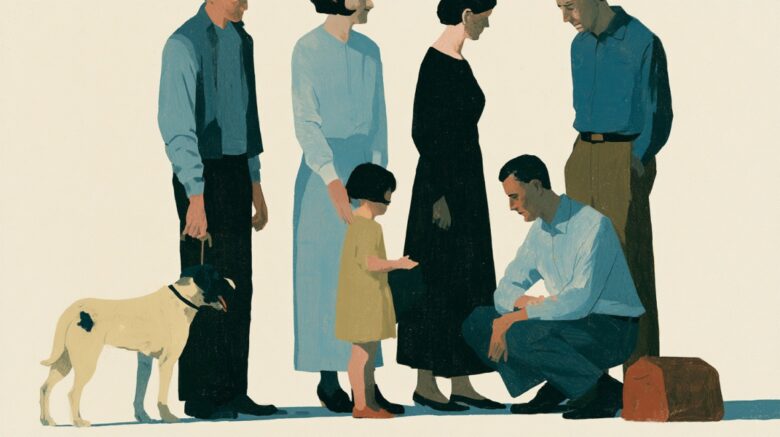
A family may know exactly why the pause happened. A hiring manager may only see a gap. That difference can be brutal.
Care is praised at home and questioned at work
At home, care may be praised as sacrifice. At work, the same years may be treated as risk.
A caregiver may have handled medication, school issues, insurance calls, transportation, meals, budgets, and emotional crises.
Still, hiring systems often do not know how to value that labor. Résumés reward job titles, promotions, and recent results.
Care often keeps life stable, but stability is easy to overlook.
Returning workers are expected to explain the pause carefully. Not too defensive. Not too personal. Not too bitter. Not too unsure.
They have to prove they are serious while staying quiet about the conditions that pushed them out.
Home may call the pause devotion. Work may call it a concern.
“Extra mile” careers rely on hidden labor
Many workplaces reward people who can travel on short notice, answer late messages, stay after hours, move easily, and treat work emergencies as the top priority.
That kind of availability often depends on someone else handling life at home.
- School pickups and sick days
- Meals, laundry, supplies, and repairs
- Medication tracking and doctor visits
- Emotional support for children or aging parents
- Forms, bills, schedules, and follow-up calls
- Planning that keeps small problems out of crisis mode
Care does not disappear when one worker stays late. It shifts to someone else.
When caregivers cannot offer endless availability, they may be seen as less committed. Not less supported. Not overloaded. Just less committed.
Work may not openly punish care. It often rewards people who can act like care is not part of life.
Identity cost – pausing work can feel like losing a self

Money matters, but the loss is not only financial. Work can hold confidence, purpose, structure, pride, friendships, and a sense of progress. Losing that can hurt, even when care matters.
Grief can sit beside love
A person can love the child, parent, partner, or relative they care for and still grieve the career they slowed down.
Guilt often keeps that grief quiet. A parent may adore her child and still miss adult recognition, income, and momentum.
A daughter may feel grateful to care for an aging parent and still resent lost options. A partner may choose care with love and still wonder why love requires so much personal loss.
Ambition may not disappear. It may get buried under appointments, meals, laundry, phone calls, and daily logistics.
It may show up later as envy, sadness, or anger when former colleagues move ahead.
- Did I waste my education?
- Will anyone take me seriously again?
- Can I earn at the same level again?
- Who am I without my title?
- Why does everyone need me, but no one asks what I lost?
Grieving the pause does not mean the care was not worth doing. It means the caregiver had a life too.
Family history can make every option feel loaded
Care decisions often carry old fears.
A woman may remember a mother who had no money of her own. A daughter may remember a grandmother who could not leave a bad marriage.
A parent may remember someone who gave everything to care and became invisible later.
Those memories can pull hard. Staying employed may feel like protection. Leaving may feel like love. Either choice can carry guilt.
A career pause is not always just about today’s schedule. It can bring up fear about money, dependence, duty, and regret.
Re-entry penalty – “temporary” pauses can create lasting consequences

Families often talk about pauses as temporary. One year. A few years. Until school starts. Until treatment ends. Until a parent stabilizes. Until life gets easier.
Paid work rarely treats the pause that gently.
Job markets keep moving while care happens
Software changes. Skills language changes. Industry expectations shift.
Colleagues move up or move on. Job posts start asking for tools and credentials that were not required before.
A worker who once felt current can start to feel out of place.
Hiring managers may see the gap before they see the reason for it. Care can show responsibility, patience, planning, judgment, and stamina. But it is often treated as lost time.
Flexibility can also cost people. A caregiver returning to work may still need hours that fit school pickup, elder care, medical appointments, or household needs.
Jobs with flexibility often pay less, offer fewer paths up, or carry quiet judgment.
Care may have been temporary. Its penalty may not be.
Re-entry can mean restarting while pretending not to restart
A paused worker may need to update skills, rebuild contacts, practice interviews, and regain confidence.
But she may feel pressure to make the pause sound small and easy to explain.
Gratitude can become a trap. She may accept lower pay just to get back in. She may take a job below her ability because she fears asking for more.
She may work too hard to prove she is still serious. She may accept weak terms because time away made her feel lucky.
Employers can benefit twice. First, unpaid care kept families running. Later, re-entry at lower pay gives them experienced workers at a discount.
Temporary may be the family’s word. The market often behaves as if the pause is permanent.
Emotional bill often arrives later

During the hardest caregiving years, many people do not have time to feel the full cost. They are too busy getting through the next appointment, school call, bill, crisis, or sleepless night.
Later, when things quiet down, the loss can become clearer.
Resentment can appear after survival mode ends
A partner may have advanced. One retirement account may have grown while another stalled. One résumé may look steady while another needs explaining.
One person may have gained confidence while another is trying to rebuild it.
Family may move on faster than the caregiver can. They may remember the period as something everyone got through together.
She may remember private options getting smaller.
Resentment often grows because the cost was never fully named.
A caregiver may not regret the care. She may regret being left alone with the consequences.
Burnout can come through being unseen
Caregiver burnout is not only about doing too much. It is also about being needed constantly and counted rarely.
A caregiver may feel invisible in two places at once. Work may treat the care years as a weakness.
Home may depend on her unpaid labor without protecting her rest, money, identity, or future.
- She feels useful but not valued.
- She gets vague thanks instead of practical support.
- Her rest is treated as optional.
- Her financial future keeps getting delayed.
- Her needs matter only after she breaks down.
A hard question follows: what happens when the person who protected everyone realizes nobody protected her?
Myth of “opting out”

People often use simple language for complicated decisions. “She chose to stay home” can make the whole thing sound calm, personal, and easy.
Often, it was anything but easy.
Preference language can hide pressure
“She chose to stay home” can hide unaffordable child care, limited paid leave, weak elder care support, rigid work schedules, unequal partnership, no nearby help, and no backup care.
That language can turn a social problem into a personal preference. It can make one person’s sacrifice look private, not structural.
Even a pause made with love can have uneven consequences. One person loses income while the whole household receives care. One person takes the résumé gap while others keep building. One person carries future risk while everyone calls the plan practical.
Calling something a choice should not end the conversation about cost.
Lost ambition may be an audit of a bad bargain
Some caregivers eventually say they do not care about career the same way anymore. Outsiders may hear laziness or lowered standards. Often, they are hearing clarity.
Caregivers know what jobs ask for. They know what families need. They know how often work praises care in theory while making little room for it in practice.
If paid work demands total availability, penalizes care, discounts gaps, and gives little loyalty back, pulling away can make sense.
Ambition may not die. It may stop cooperating with a bad deal.
What care costs reveal about power

Care does not only affect schedules. It can change who has options, who feels safe, and who gets to plan for the future.
Financial independence is not selfish
A caregiver without current income may have less leverage even in a loving household.
She may feel less able to question spending, ask for help, make plans, leave harm, or protect her future. Dependence can grow quietly.
Long pauses increase risk. Each year away can mean lower lifetime earnings, weaker re-entry power, missed retirement growth, and fewer options during crisis.
- Shared access to household money
- Continued retirement saving for the caregiver
- Clear ownership of savings and assets
- Equal say in spending decisions
- A written re-entry and emergency plan
A loving family should not ask one person to carry financial risk alone.
One career may advance because another career paused
Caregiving often makes another person’s career easier to build. Families may avoid saying that out loud because it feels uncomfortable.
But the trade is real. One résumé may stay clean because another got a gap. One worker may travel because another handled children, meals, medicine, and appointments. One retirement account may grow because another person’s paid work stopped.
- Whose promotions became easier because care was handled at home?
- Whose work reputation benefited because someone else handled emergencies?
- Whose income was treated as central?
- Whose income was treated as optional?
- Who was called supportive?
- Who was called successful?
Power often hides inside normal family routines. A career pause can show how much paid success depends on unpaid time.
Summary
Cost does not disappear because care was necessary or because love was present.
It lands on one résumé, one bank account, one retirement account, and one future.
Families should name the cost. Partners should share it. Employers should stop treating care as lower commitment.
Policy should treat care as basic support, not a private inconvenience.
No one should have to pretend a career pause was free just because it was made with love.
 Rhydian Choi
  Kim Marks