

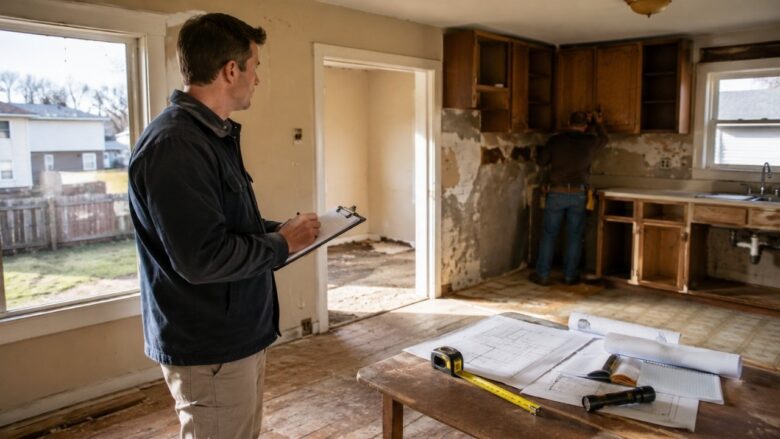
Most flips are won or lost before demolition ever starts. The renovation gets all the attention on TV, but the spread you walk away with was mostly decided the day you signed the purchase contract. pre-purchase homework is the unglamorous part of the job, and it is the part that separates a project you steer from a project that steers you.
The cushion is thinner than it used to be. A total of 64,348 single-family homes and condominiums were flipped in the first quarter of 2026, and typical gross returns rose to 25.4%, up from 24.7% in the fourth quarter. That sounds decent until you understand what the number leaves out.
Key Takeaways
- Careful pre-purchase homework is cheaper than any repair you discover after closing.
- The headline profit figures you see in flipping reports are gross spreads, not take home money.
- Structure, water intrusion, and mechanical systems drive far more overruns than finishes ever will.
- Lot restrictions decide whether your value adding plans are even legal on that parcel.
- Your resale buyer sets the ceiling on what you should spend, so study them first.
- Unpermitted work and title surprises can stall a sale for weeks you cannot afford.
Start With the Math, Not the House

It is easy to walk through a tired kitchen and start picturing the finished product. Resist that for an hour and run numbers instead. A property either supports your target profit at a specific purchase price or it does not, and no amount of enthusiasm changes that.
The 70 percent rule gives you a ceiling
The 70 percent rule works like this: take 70 per cent of a property’s after repair value and subtract your estimated renovation costs to find the most you should pay, as API Magazine explains. It is blunt and imperfect, but it stops emotional bidding cold.
Gross profit is not your profit
Gross profits in that same quarter came in around $66,000, and as HousingWire points out, that headline is a gross margin rather than a profit, measuring the spread between purchase and sale before rehab, financing, carrying costs, and the cost to sell.
Veteran flippers estimate those additional expenses typically run between 20 and 33 percent of a property’s after repair value. Knowing the real cost of building and renovating today keeps your estimates honest instead of hopeful.
What Pre-Purchase Homework Should Uncover About the Building
Cosmetic problems are priced. Hidden problems are not. Your job during the inspection window is to find the expensive stuff while you still have the right to renegotiate or walk.
Bones, water, and the systems nobody photographs
Foundations, roofs, drainage, wiring, and heating equipment eat budgets quietly. Sloping floors, sticking doors, and stair step cracks in masonry all deserve a specialist opinion before you commit, and knowing how to choose a foundation repair company is useful long before you need one.
Aging heating equipment is another line item people wave off, though furnace replacement costs can absorb a meaningful slice of a modest rehab budget.
Older housing stock deserves extra caution.
Fine Homebuilding notes that planning and detailing the scope of every renovation in clear, specific terms is key to success, and that one of the most common mistakes is an investor taking on an old home as a rehab and flip project.
Lot lines, setbacks, and what you are allowed to add
@deu2261 #PREFAB ♬ original sound – Amna mahi 89
Adding a deck, a garage, or square footage is often where the margin lives. Whether you can is a zoning question. Setback lines differ from property to property and town to town, and requirements for a main house or attached addition are generally larger than those for sheds or detached structures, according to Bob Vila, which quotes Seattle architect Howard L. Miller of Studio TJP on how variances are handled in practice.
A scaled drawing showing boundaries, existing structures, and setbacks answers most of these questions fast, and a service like Get A Site Plan can produce one without you waiting on a full survey.
Read the Street Before You Read the Listing

Every neighborhood has a price ceiling, and it does not care how nice your tile is. Walk the block on a weekday evening. Pull sold comps rather than active listings, because asking prices tell you what sellers hope for, not what buyers paid.
Then figure out who buys here. Many flips land in the hands of people making their first purchase, so understanding what first time buyers look for helps you decide where to spend and where to stop.
Overbuilding for the street is one of the most common ways goodpre-purchase homework gets undone by bad spending decisions later.
Build the Budget Backwards
Start from your realistic resale number, subtract everything, and see what is left. If the leftover looks thin on paper, it will be thinner in reality.
| Cost line | Where flippers get it wrong | How to check it before you buy |
| Purchase price | Bidding against the resale ceiling | Verify sold comps within a tight radius and recent window |
| Rehab scope | Pricing finishes, forgetting systems | Walk the property with a contractor during the inspection window |
| Holding costs | Assuming a fast, clean sale | Price loan payments, utilities, insurance, and taxes for a longer timeline |
| Selling costs | Leaving out commissions and legal fees | Ask an agent for a full net sheet at your target price |
| Contingency | Treating it as optional | Set it aside as a fixed percentage and protect it |
Contractor conversations belong in this stage, not after closing. A clear list of questions to ask a contractor turns vague estimates into numbers you can actually plan around.
A Short Pre-Purchase Homework Checklist
- Confirm after repair value with three recent, comparable sold properties.
- Order a full inspection, plus a structural or sewer opinion when anything looks off.
- Check zoning, setbacks, easements, and any historic overlay on the parcel.
- Search title and permit history for open work, liens, or unapproved additions.
- Get at least one contractor walkthrough before your contingency period expires.
- Price holding and selling costs for a timeline longer than you expect to need.
FAQ
The Bottom Line
Flipping rewards discipline more than taste. The investors who keep their margins are rarely the ones with the best renovations, they are the ones who bought correctly and knew exactly what they were buying. Treat pre-purchase homework as the highest paid work you do on the entire project, because on most deals, it is.

 Nina Smith