


Home construction is no longer seeing the sharp cost spikes that followed 2020, but building a house in 2026 is still expensive.
Several cost signals show why budgets still need care:
- Residential construction costs rose about 1.1% over the past 12 months.
- Structural timber rose about 5%.
- Overall prices have slowed, but they have not meaningfully dropped.
Real project cost now includes site conditions, delays, finance charges, labor risk, design choices, and long-term energy use.
Cost per square foot or square meter can help with early planning, but full cost means getting a finished, approved, occupied home ready for daily life.
Let’s go through all the costs worth mentioning.
What Changed in 2026?
Cost growth has cooled, but lower inflation has not made new homes cheap. Many key inputs are still expensive, and builders have limited room to reduce prices.
For buyers, 2026 budgeting needs to account for both slower price growth and the fact that many base costs are still sitting at a high level.
Cost certainty is becoming just as important as the headline price.
In Cyprus, Elythera Investments shows how some builders are responding with clearer steel-frame pricing, catalogue-based options, and defined construction routes.
Current planning figures show how high realistic budgets can be:
| Location / Build Type | Estimated Cost per Square Meter |
| New Zealand quality new build | NZ$8,000 to NZ$9,000 |
| London and the South East starting point | £1,775 – £3,000 |
| Constrained London and South East sites | About £2,900 |
| High-end projects with basements | £4,600+ |
| Cyprus house or apartment build | Roughly €1,070 |
| Cyprus basic-to-standard build range | €1,200 to €1,800 |
Cyprus adds a useful comparison because headline construction numbers can look lower than New Zealand or London, while the final private-build budget can still rise quickly once finishes, utilities, exterior work, and site conditions are included.
A lower per-square-meter figure may not include every item needed to complete the home.
Major builder discounts are unlikely because margins are already tight.
About 70% of a build cost is tied to materials and subcontractors, which builders do not fully control.
Time now carries more visible cost of building a home. Delays increase loan interest, labor exposure, holding costs, and scheduling risk.
A new single-family home can take 8-9 months between permit approval and completion. On a $400,000 project with a 7% construction loan rate, interest can total about $20,000 during that period.
Faster construction can reduce finance pressure when a project fits the method. Steel panel construction can reduce a build phase near 255 days to about 30 days.
On a $400,000 project, that shorter timeline can cut interest carry by roughly $17,000.
Energy efficiency also plays a bigger role in value. Buyers are no longer looking only at the build price, because comfort, running costs, and resale strength can affect total ownership cost.
Better insulation, airtightness, triple glazing, and efficient systems can raise initial cost, but they can improve comfort, energy use, ratings, and resale strength.
Passivhaus-level construction usually adds about 2% to 5% to base construction costs.
Extra spending can support lower energy demand, better indoor comfort, stronger EPC ratings, and stronger resale results.
What Has Not Changed
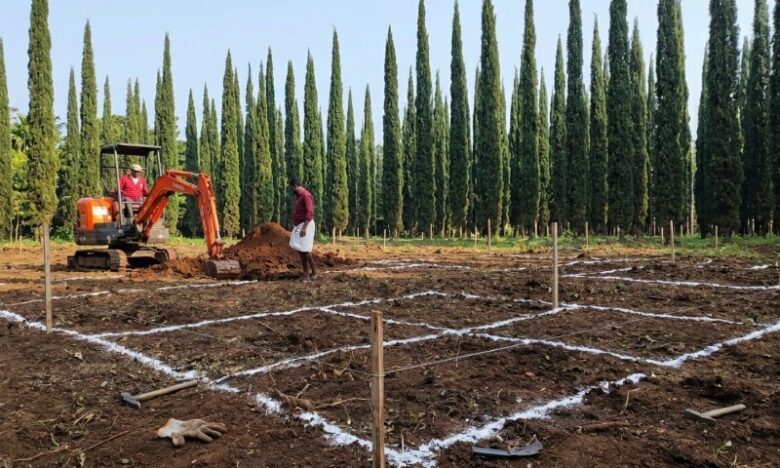
Site conditions still create major budget swings.
Sloped land, weak soil, restricted access, retaining work, drainage, and utility connections can add high costs before main construction begins.
Cyprus is especially relevant here because land can vary widely between urban plots, coastal areas, villages, and hillside locations.
A house that looks affordable on a square-meter basis can become more expensive if the plot needs road access, service upgrades, excavation, retaining work, or stronger energy-related specifications.
Complex design still costs more. Complicated footprints, multiple rooflines, large glass areas, basements, premium finishes, and custom details all raise the budget.
Rectangular footprints are usually more cost-effective than L-shaped or H-shaped plans. Extra corners, cladding junctions, roof connections, and higher window-to-floor ratios all add labor and material costs to building a home.
Premium interior choices can move the budget quickly.
A premium kitchen may cost £57,000 or more, while a more economical custom option may sit near £11,000.
Labor is still one of the hardest costs to control. Skilled trades are expensive, and availability can affect both pricing and schedule.
Full Budget Means More Than Build Price

A realistic home-building budget needs more than the contract price.
Owners should plan for design, professional fees, engineering, permits, site preparation, utility connections, landscaping, exterior works, finance charges, and contingency.
Recent project averages show how the total cost of building a home can break down:
| Cost Item | Estimate in Euros |
| Average house size | 192 square meters |
| Pre-construction | About €74,744, or 9% of total cost |
| Siteworks | About 10%, or €79,727 |
| House construction | About 75% of total cost, averaging €3,239 per square meter |
| Exterior works | About €34,881, or 4% to 5% |
Cyprus budgets also need a careful scope check. A €1,200 to €1,800 per-square-meter estimate may describe basic materials, labor, and standard finishes, while a €1,700 to €2,500 per-square-meter estimate may better account for the broader cost of a house or apartment build, excluding land.
Buyers should check exactly what is included before comparing quotes.
Professional fees add another major line item. Architects, structural engineers, and consultants typically add 7% to 10% of total project cost.
Contract price alone does not show the full cost of building a home. A home still needs approvals, services, access, exterior work, professional input, and enough contingency to handle problems during construction.
Where Value Comes In
@askmrmortgage Building a House in 2026. What’s the average cost to build a custom home in your state? This should give you a pretty good starting point as to what you should expect when talking to a builder and building a custom home. Whether that’s a barndominium, farmhouse, or any other style of custom home. #buildingahouse#housebuilding#newhome#realestate#farmhouse
A lower upfront quote is not always the best value.
Stronger value usually comes through reducing risk, controlling scope, shortening delays, and choosing upgrades that lower future costs.
Early planning and cost certainty
Good planning can reduce expensive surprises.
Concept work, digital modeling, early estimating, and builder input can help owners see likely costs before major decisions are locked in.
Cost certainty improves when key risks are addressed early:
- Material pricing can be locked earlier in suitable projects.
- Shorter schedules can reduce loan interest and holding costs.
- Lower labor variability can make final cost easier to predict.
In Cyprus, early checks on utilities, access, slope, and permit requirements can prevent late budget changes.
Simple, efficient design
A straightforward layout can save money without lowering quality.
Clean shapes, practical spans, simple roof forms, and efficient floor plans usually cost less to build than highly complex designs.
Owners can protect the budget by limiting unnecessary junctions, oversized glazing, complicated rooflines, and costly custom features unless those choices add clear daily value.
Right-sizing the home
Bigger is not always better, and smaller is not always cheaper per square meter.
Smaller homes can cost more per square meter because fixed costs are spread across less floor area.
Best value often comes through building the space actually needed, then spending on durability, comfort, storage, and efficient layout instead of extra floor area.
Energy performance
Comfort, efficiency, and durability can create stronger long-term value than a low initial price alone.
Better insulation, airtightness, quality windows, and efficient heating and cooling can reduce energy use and improve daily living quality.
Passivhaus-level performance may add 2% to 5% at the start, but that spending can support lower energy bills, better indoor comfort, stronger ratings, and better resale results.
Choosing the right construction method
Traditional construction works well for custom homes, complex rooflines, and specific architectural styles.
It gives owners more design flexibility, but it can expose the budget to longer timelines and more labor variability.
Panelized or factory-built systems may work better when speed, repetition, and cost certainty matter most.
Multi-unit housing and community-scale projects can benefit because repeated details and faster assembly help reduce waste, delays, and finance charges.
Steel panel construction is not a fully custom product, but it can suit projects where predictability, speed, and lower carrying costs matter more than full design freedom.
FAQs
Summary
Building a home in 2026 is still expensive.
Best value comes through reducing risk, shortening delays, simplifying design, and investing in choices that improve long-term cost.
The real cost of building a home is not only the price agreed at contract signing.
Every site decision, design choice, schedule delay, finance charge, and efficiency upgrade affects what a home costs over time.
 Nina Smith