

Most travelers exploring Bosnia and Herzegovina head straight for Sarajevo or Mostar. Livno, a small town in the country’s southwest, offers something entirely different: hundreds of free-roaming horses, vast mountain pastures, traditional cheese and a slower pace of life.
Set between the Livanjsko Polje plain and the mountains of the Dinaric Alps, Livno is an excellent destination for travelers who prefer open landscapes to crowded tourist attractions.
The three experiences worth planning a trip around are a guided wild horse safari on the Kruzi plateau, tasting traditional Livanjski sir and exploring the mountain scenery surrounding the town. Add the historic center, the Duman spring and a local museum, and there is easily enough to fill a rewarding two-day visit.
Here is what makes Livno special, how to explore its best attractions and what to know before setting off.
The Wild Horses of Livno: An Unusual Wildlife Experience
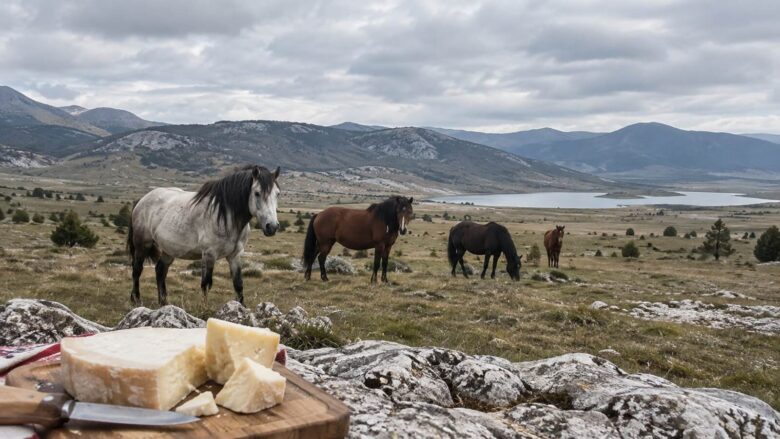
Livno’s best-known attraction is not a monument or a building. It is the large population of horses living freely on the Kruzi plateau, north of town and beneath Mount Cincar.
Although commonly called wild horses, they are more accurately described as feral horses. Their ancestors were domestic working animals released into the mountains when agricultural mechanization made horse-powered farming less necessary during the 1970s.
Over subsequent generations, the animals adapted to life outdoors, forming herds that move across the highland pastures throughout the year.
Today, several hundred horses inhabit the area, making it one of the most remarkable places in the Balkans to observe free-roaming horses in a mountain environment.
Where Can You See the Horses?
The horses live on the Kruzi plateau, an extensive area of grassland, rocky terrain and rolling hills at roughly 1,200 meters above sea level.
The landscape stretches across approximately 150 square kilometers, meaning the herds do not remain in one predictable spot.
That is why visiting the plateau independently without local knowledge is not necessarily the best approach.
Several operators based around Livno organize guided wildlife excursions using off-road vehicles. Guides know the terrain, understand where the horses are likely to gather and can adjust the route depending on weather and herd movement.
Tours commonly last about two to four hours, although the duration varies by operator.
The experience is about much more than getting a photograph. Watching horses graze, interact and move across an enormous open plateau is memorable precisely because they are not confined to paddocks or a managed enclosure.
How to Visit Responsibly
The horses may look calm, but they are not domesticated tourist animals accustomed to being handled by strangers.
- Keep a respectful distance, particularly from foals and stallions.
- Avoid feeding, touching or attempting to ride the animals.
- Follow the guide’s instructions when approaching a herd.
- Avoid loud noises, sudden movements and blocking the horses’ path.
- Leave no litter and avoid damaging the grassland.
A telephoto lens is a better choice than approaching an animal for a close-up photograph.
It is also important to remember that sightings cannot be guaranteed. The horses move freely, and their location depends on the weather, grazing conditions and activity within the herd.
When Is the Best Time to See Them?

Late spring through early autumn is generally the most convenient period for visiting the plateau, especially for travelers unfamiliar with mountain conditions.
Summer offers long daylight hours, although exposed areas can be hot and windy.
September and early October can be particularly attractive for photography, with softer light and fewer visitors than during the peak holiday season.
Winter excursions may be possible with specialist operators, but snow, ice, wind and poor visibility make independent exploration much less advisable.
Whatever the season, check the forecast and confirm that your chosen tour is operating before traveling to Livno.
Livanjski Sir: The Cheese That Tells the Story of the Region
Wild horses may attract photographers, but Livno’s food culture gives travelers another compelling reason to visit.
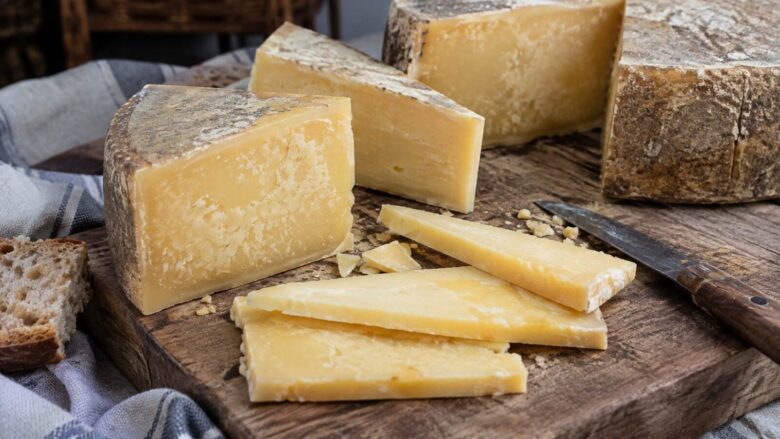
Livanjski sir, or Livno cheese, is a traditional hard cheese closely associated with the pastures and dairy-making heritage of southwestern Bosnia and Herzegovina.
Made using cow’s milk, sheep’s milk or a mixture of the two, depending on the producer and product specification, the cheese has a firm texture and a distinctive, increasingly pronounced flavor as it matures.
Younger varieties are generally milder, while more mature cheese develops stronger, pleasantly piquant notes.
The cheese is not simply a tourist souvenir. It is part of a regional food tradition linked to livestock farming and the grasslands surrounding Livno.
What Makes Livno Cheese Different?
One important detail is that the name Livanjski sir is associated with a formally protected geographical product in Bosnia and Herzegovina.
Its production is connected to a defined geographical area, and the registered specification sets requirements for the cheese and its origin.
This matters because not every hard cheese sold in the region is necessarily produced under the protected specification.
When shopping, look for clear producer information, labeling and the geographical indication where applicable.
If possible, ask to try different maturities before buying. Comparing a younger cheese with an aged version is one of the simplest ways to understand the differences in texture and taste.
Where to Taste and Buy Local Cheese
Local food shops, markets and dairy producers are good places to start.
Some restaurants also feature Livno cheese as part of a cold platter, alongside cured meats, bread and seasonal accompaniments.
If you plan to take cheese home, ask the seller about packaging, refrigeration and storage. This is particularly important if you are traveling a long distance or crossing an international border, where rules for carrying dairy products may apply.
A small tasting is worth including even in a short visit. It connects the region’s agricultural landscape with something you can experience directly.
The Mountain Air and Landscapes Around Livno
Livno’s setting is one of its strongest attractions.
The town lies beside Livanjsko Polje, a vast karst plain surrounded by mountain ranges, wooded slopes and limestone terrain.
Unlike the dense urban landscapes of some European destinations, the scenery around Livno feels unusually open.
There are long views across meadows and fields, changing skies and hills that extend well beyond the town.
For people who enjoy landscape photography, quiet walks or simply spending time outdoors, this setting is a major part of the appeal.
Mount Cincar and the Kruzi Plateau

Mount Cincar rises to approximately 2,006 meters, dominating the northern landscape around Livno.
The Kruzi plateau sits below the mountain and forms part of the same rugged highland environment as the wild horse habitat.
Travelers should distinguish between a guided sightseeing safari and a full mountain hike.
A vehicle-based tour can provide access to scenic areas without requiring mountaineering experience. Reaching higher slopes or attempting a summit hike, however, demands more preparation, suitable equipment and an understanding of the route.
Mountain weather can change quickly, even when conditions in Livno seem mild.
Bring warm layers, wind protection, sturdy footwear and enough water for the planned activity.
For longer hikes, use reliable route information or arrange a qualified local guide.
Livanjsko Polje: A Landscape Worth Slowing Down For
The plain itself deserves attention.
Livanjsko Polje is one of the great karst landscapes of the Dinaric region, with seasonal changes that give it very different appearances throughout the year.
In spring, parts of the landscape can become wetter and greener. Summer brings expansive grasslands, while autumn often creates attractive contrasts between harvested fields, changing vegetation and surrounding mountains.
You do not need to complete a challenging hike to appreciate it.
A short scenic stop, a guided countryside excursion or a carefully chosen viewpoint can be enough to understand why the landscape feels so different from the nearby Adriatic coast.
What to See in Livno Town
Although the surrounding nature is the main draw for many travelers, the town itself should not be overlooked.
Its historic streets, religious buildings and local cultural institutions offer a more grounded picture of the region than a horse safari alone.
Duman Spring and the Bistrica River
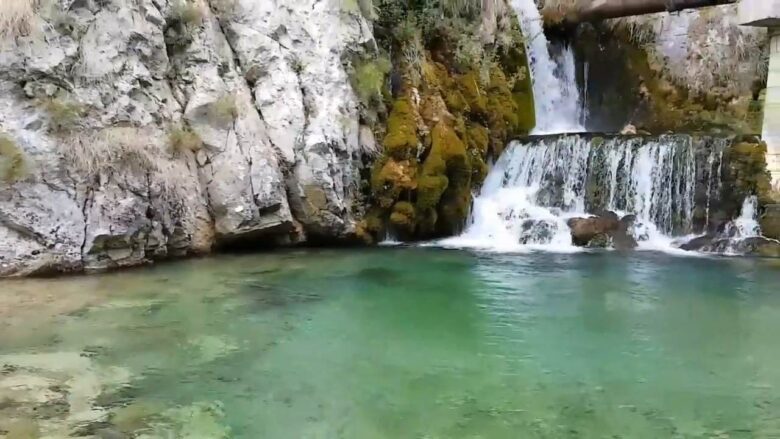
One of Livno’s most picturesque locations is Duman, where the Bistrica River emerges from a dramatic rocky setting near the older part of town.
The combination of water, stone and traditional buildings makes this a worthwhile stop for photographers and anyone interested in the town’s geography.
It is a manageable addition to a walk around Livno rather than a separate full-day excursion.
The water and surrounding stone surfaces can be slippery, so take particular care after rain.
The Old Town and Ottoman Heritage
Livno’s historic areas reflect centuries of cultural and architectural change.
Visitors can explore traditional streets, Ottoman-era religious architecture and viewpoints overlooking the surrounding valley.
One notable landmark is the Hajji Ahmed the Ducatar Mosque, commonly known as Glavica Mosque, which occupies a prominent position above the town.
Rather than racing through a long checklist of monuments, allow time to walk through the older neighborhoods and see how the historic settlement connects with the surrounding mountains.
View this post on Instagram
Franciscan Museum and Gorica Gallery
For a deeper understanding of local history and art, consider the Franciscan Museum and Gorica Gallery.
The institution holds collections related to the cultural and historical heritage of Livno and the wider region, along with exhibitions of visual art.
It is a useful option for a rainy afternoon or for travelers interested in learning more about the area’s past.
The museum is located at Gorička cesta 40. Its regular visitor hours are limited, with seasonal Saturday opening, so confirm access before planning your visit.
How to Get to Livno
Livno is in southwestern Bosnia and Herzegovina, inland from Croatia’s Dalmatian coast.
It can fit naturally into a wider trip through the region, particularly for visitors traveling between coastal Croatia and central Bosnia.
Travelers who would rather avoid renting a car can check the routes and journey options listed by Livno Bus, which connects Livno with destinations including Split, Mostar, Sarajevo and Zagreb.
The exact availability of services depends on the date, route and direction of travel. Always check the current timetable rather than assuming that the return journey operates at a convenient hour.
Getting From the Bus Station to Local Attractions
Arriving in town by bus is only one part of the journey.
Central attractions such as the old town can be explored locally, but the wild horse habitat on the Kruzi plateau is not a normal urban walking attraction.
You will need to arrange onward transportation, typically through a guided 4×4 excursion.
If a horse safari is your main reason for visiting, book the activity before finalizing travel and accommodation plans.
Ask your operator where the tour begins, whether hotel pickup is available and how much time you should allow between your bus arrival and the excursion.
This will prevent an otherwise enjoyable trip from being complicated by missed connections.
A Practical Two-Day Livno Itinerary
Two days provide a good introduction to Livno without making the schedule feel rushed.
| Time | Suggested activity |
| Day 1, morning | Arrive in Livno and explore the historic center |
| Day 1, afternoon | Visit Duman spring and try local food, including Livanjski sir |
| Day 1, evening | Enjoy a relaxed dinner and prepare for the mountain excursion |
| Day 2, morning | Take a pre-booked guided wild horse safari |
| Day 2, afternoon | Explore additional viewpoints or visit the Franciscan Museum if opening hours permit |
This schedule is flexible rather than fixed.
If the only available horse tour is in the afternoon, reverse the activities. If your bus arrives late, plan the first evening around dinner and use the following day for sightseeing.
For an itinerary focused mainly on photographing horses, consider adding a third day. An extra opportunity to reach the plateau is useful when weather conditions are uncertain.
What Should You Pack for Livno?
Livno’s mountain environment requires slightly different preparation from a typical city break.
Even in warmer months, temperatures and wind conditions can change substantially between the town and the higher plateau.
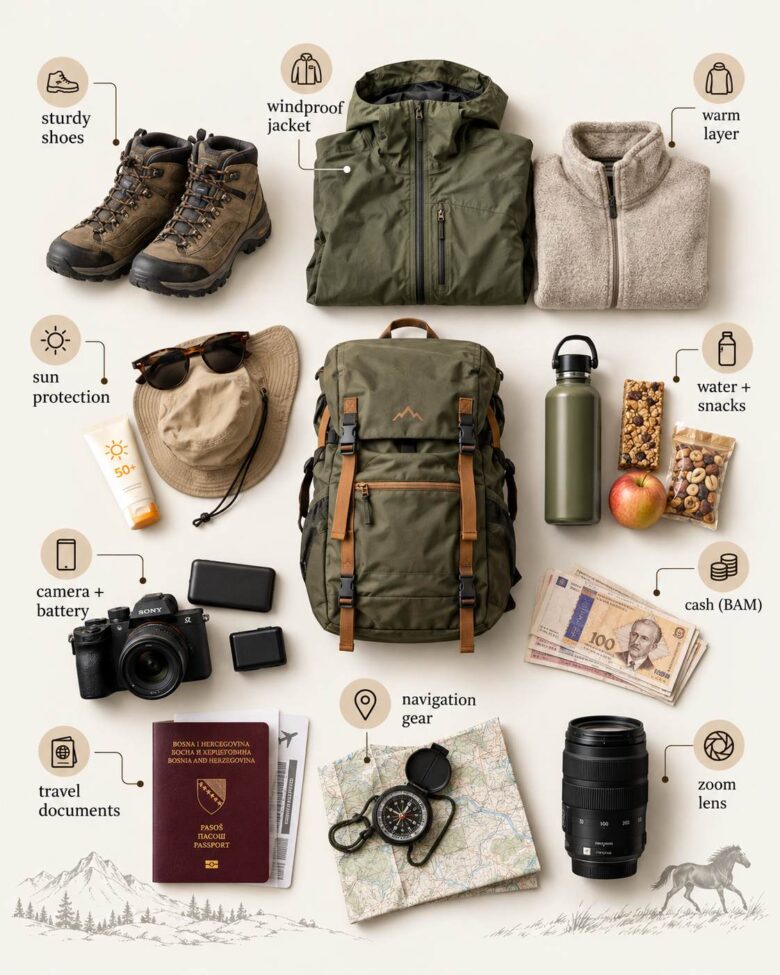
- Sturdy, comfortable footwear suitable for rocky ground.
- A windproof jacket and an extra warm layer.
- Drinking water and a few snacks for longer excursions.
- Sunglasses, sunscreen and a hat during sunny months.
- A camera or phone with enough battery power for several hours outdoors.
- Cash in Bosnia and Herzegovina convertible marks for smaller purchases.
- Necessary travel documents, especially when crossing from Croatia.
If you are planning to hike rather than join a sightseeing tour, additional navigation and outdoor equipment may be necessary.
For horse photography, a zoom lens is particularly helpful because it allows you to capture the animals without approaching too closely.
Is Livno Worth Visiting?
Livno will not appeal to everyone in quite the same way.
Travelers looking for nightlife, large shopping districts or a packed schedule of major attractions may prefer a larger city.
But for people drawn to wildlife, traditional food, mountain scenery and regional culture, it offers an unusually satisfying combination.
You can spend one morning watching free-roaming horses on a vast plateau, return to town for a plate of locally produced cheese and finish the day exploring streets shaped by centuries of history.
The town also works well as a quieter addition to an itinerary that includes Split, Mostar or Sarajevo.
For the best experience, allow at least two days, book your horse excursion in advance and plan transport around the activities you care about most.
Livno’s appeal is not that it tries to compete with Bosnia and Herzegovina’s most famous destinations. It offers something different: open space, a distinctive local food tradition and the chance to experience a remarkable mountain landscape at your own pace.
 Nicola Holder