


The contemporary business environment is characterized by a complex purchasing environment that is influenced by global supply chains, regulatory controls, and growing cost pressures.
Procuring is no longer a back-office activity that is concerned with transactions alone. It has transformed into an activity that determines financial forecasting, resilience of suppliers, and continuity of operations.
Organizations need to know how sourcing, contracting, purchasing, and payment activities relate to one another in order to deal with such complexity.
Through the prism of the procurement lifecycle, leaders can view these activities as a stream and no longer as a series of unrelated activities.
The procurement system is at the heart of this flow and ensures that departments coordinate data, approvals, and execution.
The End-to-End Source-to-Pay Framework
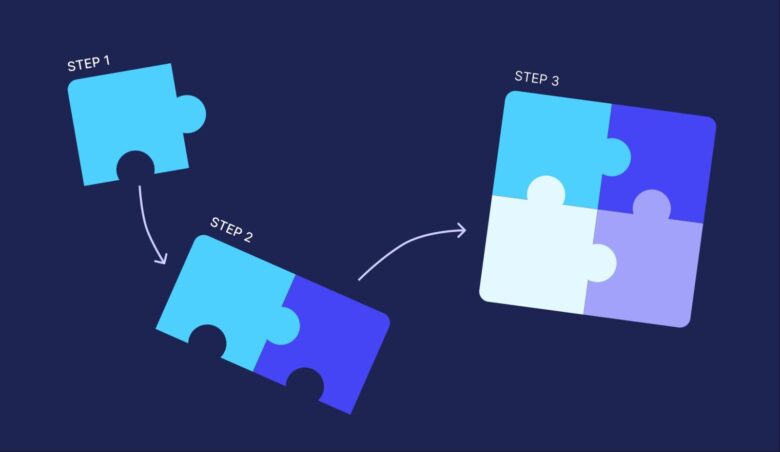
Source-to-pay refers to all the activities involved in determining a business need up to paying the supplier.
This model comprises sourcing events, contract creation, requisitioning, purchase order management, invoice processing, and settlement.
Dependency exists between each phase, and therefore, coordination is necessary.
Inefficiencies are more easily identified and fixed when organizations utilize an end-to-end mindset.
The procurement as a continuous operational model is also better in enhancing accountability, as it helps to clarify ownership at any given stage.
This is a holistic approach to lessen the number of reworks and facilitate transitioning to sourcing, finance, and operations teams.
The Importance of the Procurement Lifecycle to Enterprises
The procurement lifecycle is the orderly manner in which procurement work flows.
It commences with the identification of demand and goes through supplier engagement, procurement, and post-purchase review.
Every stage produces information that is used to make decisions at the lower end.
A well-defined lifecycle assists the firms in streamlining business unit practices.
It also makes sure the sourcing strategies are in line with the financial controls and compliance standards.
Knowing this lifecycle inside and out, enterprises may decrease spend leakage, enhance accurate forecasting, and enhance supplier governance.
Demand Planning and Visibility at the Early Stages
Proper demand planning guarantees successful procurement results. Sourcing events are precise when there is clarity regarding the requirements, thus making it more efficient.
Exposure during this phase reduces the impulse buying that, in most cases, circumvents the governance controls.
Better demand visibility also allows procurement units to centralize departmental requirements, leverage bargaining power, and minimize fragmentation.
Sourcing and Supplier Engagement Discipline
Organised sourcing practices encourage transparency, fairness, and repeatability.
The standardized evaluation criteria assist the organizations in their comparison of the suppliers in an objective manner and in recording the decision rationale.
Formal involvement enhances the trust between the suppliers and disputes because it establishes expectations early on.
The Move of Contracts to Execution
The exercise of procurement discipline comes after the finalization of contracts. Purchase orders, delivery schedules, and prices must be in agreement with the agreed terms.
A distinct separation of duties among sourcing and purchasing teams eliminates misunderstandings and noncompliance in contracts.
The Systems Role in Facilitating Procurement Control

The contemporary procurement system is the working foundation of procurement operations.
It gathers supplier information, implements approval processes, and offers visibility in the sourcing and purchasing process.
This synchronization eliminates the need to use manual tracking and disconnected tools.
In addition to efficiency, system-based controls enhance audit preparation and policy adherence.
Organisations are assured that procurement activities are in line with internal policies and external standards.
Purchase Governance and Spend Executive
Execution entails the transformation of approved requirements into purchase orders and supplier commitments.
It is at this point that governance frameworks are most prone to breakdowns when controls are weak or inconsistent.
The centralized purchasing processes make sure that approvals, budgets, and supplier terms are in line.
Good discipline in implementing makes it less expensive and enhances financial predictability within the organization.
Invoices and Financial Alignment
Procurement results relate to financial reporting through invoice processing. Proper matching of purchase orders, contracts, and invoices helps to avoid delays and overpayments.
Automated matching and validation cut back on the amount of manual processing and enhance speed.
This coordination enhances cooperation between the finance and procurement teams.
Supplier Performance and Continuous Improvement
The procurement cycle is completed by supplier performance appraisal. The indicators, such as precision with the delivery, responsiveness, and adherence to the contract, impart information regarding reliability among suppliers.
The organizations will most likely enhance the sourcing strategies by documenting performance data in a structured format and improving supplier relationships over the long term.
Supplier Reliability and Compliance Measuring
Regular measurement systems assure the fairness of suppliers.
The objective metrics can be used to find improvement opportunities without hurting relationships.
Sound performance information is used to make informed renewal and consolidation decisions.
Feedback Loops and Collaboration

Open lines of communication promote active resolution of issues. Positive feedback builds relationships and eliminates repetitive issues.
Teamwork can bring forth innovation opportunities that go beyond simple transactions.
Introducing Procurement Functionalities to Scale
Lack of integration of procurement leads to inefficiencies and blind spots. Integration means that there is a flow of data between sourcing, purchasing, and payment.
A unified procurement system facilitates the ability to scale through standardization of processes and flexibility to meet business-specific needs.
Conclusions on Strategic Procurement Enablement
The future of sustainable procurement performance lies in the ability to consider procurement as a cohesive field of study instead of a collection of separated functions.
When organizations think about the procurement lifecycle as a whole, they are in a better position to control spend and risk and respond to dynamic market conditions.
With more structured and data-driven approaches in place by enterprises, platforms such as Procol mirror the way technology can facilitate transparency, collaboration, and governance in the procurement processes.
Through harmonizing processes in an integrated procurement platform, organizations are in a position to transition to more predictable, robust, and strategically controlled procurement results.
 Jovica Radulovich
 Nina Smith